
When your roof starts leaking during a heavy rainstorm, ice storm, or after severe wind damage, you need emergency roof repair fast. Every hour of delay means more water damage to your attic insulation, ceiling drywall, electrical systems, and personal belongings. In Toronto’s climate — where sudden storms, freezing rain, and heavy snow events are regular occurrences — knowing what to do during a roofing emergency can save thousands of dollars in secondary damage.
In this guide, Universal Roofs explains how to handle roofing emergencies, what constitutes an emergency vs. a routine repair, and how to protect your home while waiting for professional help.
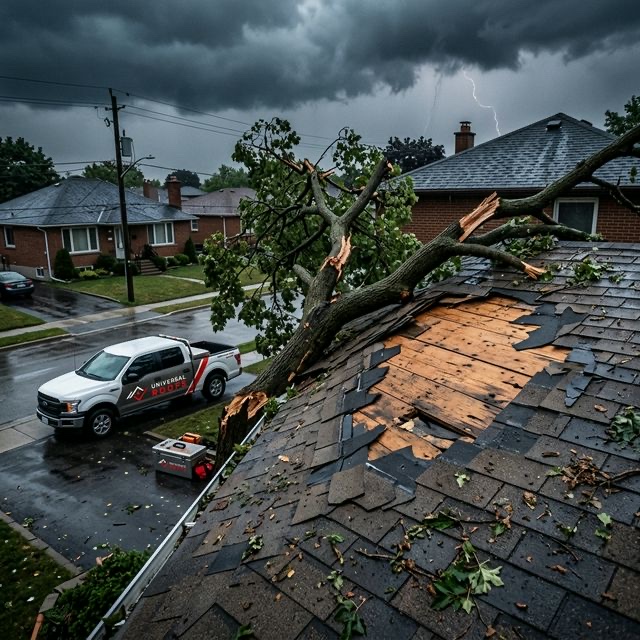
What Qualifies as a Roofing Emergency?
Not every roofing problem is an emergency, but some situations require immediate professional response. Here is how to classify the urgency of your situation:
| Situation | Urgency Level | Recommended Response Time | Action |
|---|---|---|---|
| Active water leaking into living space | Emergency | Same day / within hours | Contain water, call emergency roofer immediately |
| Large section of shingles blown off (exposed decking) | Emergency | Same day | Tarp if safe, call roofer immediately |
| Tree fallen on roof | Emergency | Immediately | Evacuate if structural damage suspected, call roofer and tree service |
| Storm damaged flashing around chimney | Urgent | 1-2 business days | Place bucket under any drip, schedule urgent repair |
| A few shingles missing after wind event | Routine | Within 1-2 weeks | Schedule regular roof repair appointment |
| Minor stain on ceiling, no active drip | Routine | Within 2-4 weeks | Schedule inspection to identify source |
| Gutter damage or sagging | Routine | Within 2-4 weeks | Schedule gutter repair or replacement |
What to Do During a Roof Emergency: Step-by-Step
If you discover an active roof leak or significant storm damage, follow these steps immediately:
- Prioritize Safety: If there is structural damage (sagging ceiling, large tree on roof), evacuate the affected area immediately. Do not stand under a sagging ceiling — wet drywall is extremely heavy and can collapse without warning.
- Contain the Water: Place buckets, garbage cans, or any watertight containers under active drips. Spread plastic sheeting or towels on floors and furniture to protect them from splash and overflow.
- Move Valuables: Relocate electronics, documents, artwork, and other valuables away from the affected area. Water damage expands quickly as it follows paths through the ceiling structure.
- Puncture Ceiling Bubbles: If you see a bulging water bubble in your ceiling, carefully puncture it at the lowest point with a screwdriver or awl and catch the water in a bucket. This prevents an uncontrolled collapse of the entire ceiling section.
- Document Everything: Take photos and video of all damage — the leak source, affected areas, damaged belongings, and any visible roof damage from ground level. This documentation is essential for insurance claims.
- Call a Professional Roofer: Contact Universal Roofs at (416) 732-2421 for emergency response. We provide same-day emergency service for active leaks and storm damage throughout the GTA.
- Contact Your Insurance: Notify your home insurance company as soon as possible. Most policies require “prompt notification” of damage, and delays can impact claim eligibility.
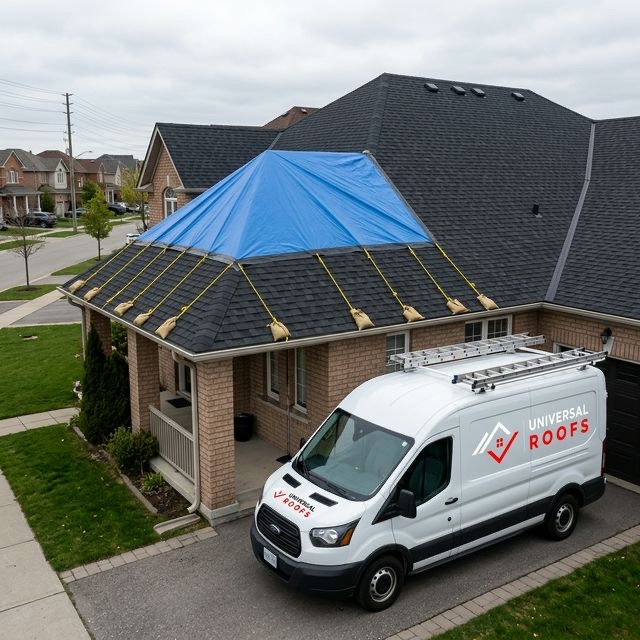
Emergency Roof Repair Costs in Toronto (2026)
| Emergency Service | Cost Range (GTA 2026) | What Is Included | Typical Response Time |
|---|---|---|---|
| Emergency Tarp Installation | $300 – $800 | Secure tarp over damaged area, prevent further water entry | 2-6 hours |
| Emergency Leak Diagnosis and Seal | $500 – $1,200 | Locate leak source, temporary or permanent repair | Same day |
| Emergency Shingle Replacement (small area) | $600 – $1,500 | Replace blown-off shingles, reseal area | Same day – next day |
| Emergency Flashing Repair | $500 – $1,800 | Repair or replace failed flashing at chimney, skylight, or wall junction | Same day – next day |
| Emergency Tree Damage Response | $1,000 – $5,000+ | Tarp, remove tree (with arborist), assess structural damage, temporary weatherproofing | Same day |
| After-Hours / Weekend Premium | +25% to +50% | Overtime labour for service outside regular hours | As available |
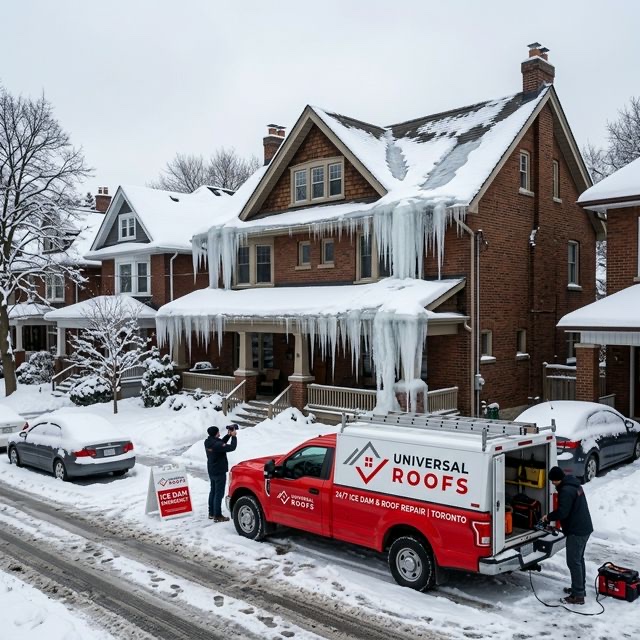
Common Causes of Roofing Emergencies in Toronto
Understanding the most common causes of emergency roof situations helps homeowners take preventive measures:
| Cause | Season | Frequency in GTA | Prevention |
|---|---|---|---|
| Windstorm (90+ km/h gusts) | Spring, Fall | 3-5 events/year | Ensure shingles are properly nailed, repair loose tabs promptly |
| Ice Dams | Winter | Very common | Adequate attic insulation and ventilation, ice/water shield along eaves |
| Heavy Snow Load | Winter | 2-3 events/year | Professional snow removal for flat and low-slope roofs |
| Freezing Rain | Winter, Early Spring | 3-6 events/year | Maintain drains and gutters, ensure proper drainage paths |
| Fallen Tree / Large Branch | Any season | During storms | Trim overhanging branches, remove dead trees near home |
| Hail Damage | Summer | 1-2 events/year | Impact-resistant shingles (Class 4 rated) |
| Accumulated Deferred Maintenance | Any season | Ongoing | Annual professional inspections, address issues when small |
Insurance Claims for Emergency Roof Damage in Toronto
Understanding the insurance process for roofing emergencies helps you maximize your claim and minimize out-of-pocket costs:
- Covered Events: Most home insurance policies cover sudden and accidental damage from wind, hail, fallen trees, ice storms, and lightning. The key words are “sudden” and “accidental” — gradual wear and tear is never covered.
- Your Obligations: You are required to take reasonable steps to prevent further damage (called “mitigation”). This means placing tarps, containing water, and calling for emergency repair. Emergency tarping and temporary repair costs are typically reimbursable under your policy.
- Document Before Repair: Take extensive photos and video before any repairs are made. Show the damage from multiple angles and include context shots showing the overall roof condition. This documentation supports your claim.
- Get Multiple Quotes: Your insurer may require multiple repair/replacement quotes. Have your emergency roofer provide a written estimate, and inform your adjuster promptly.
- Depreciation: Be aware that insurers apply depreciation to older roofs. A 20-year-old roof damaged in a storm may receive only 40 to 60 percent of replacement value. This is another reason to proactively replace aging roofs before catastrophic failure forces an emergency.
Preventing Roofing Emergencies: Proactive Maintenance
The best emergency is one that never happens. Regular preventive maintenance dramatically reduces the risk of emergency roof situations:
- Annual Professional Inspection: Have a certified roofer inspect your roof annually. They catch problems invisible from the ground — cracked flashing, lifted shingles, deteriorated sealant, blocked ventilation.
- Trim Trees: Keep branches trimmed at least 3 metres (10 feet) from your roof surface. Remove dead or visibly compromised trees before they fall during storms.
- Maintain Gutters and Downspouts: Clean gutters at least twice per year. Blocked gutters cause water backup that infiltrates fascia, soffit, and eave areas.
- Fix Small Problems Immediately: A $200 flashing seal today prevents a $2,000 emergency leak repair during next month’s rainstorm. Never defer a known roofing issue into storm season.
- Upgrade Vulnerable Components: If your roof is in generally good condition but has weak points — old skylight flashing, deteriorated chimney flashing, or worn valley lining — address these proactively before they fail during severe weather.
- Ensure Adequate Attic Ventilation: Proper attic ventilation prevents ice dams, the single most common cause of winter roofing emergencies in Toronto. Ridge vents plus soffit vents create continuous airflow that keeps the roof deck cold and prevents snow from melting and refreezing at the eaves.
What to Look for in an Emergency Roofer in Toronto
When you are in crisis mode, it is tempting to call the first number you find. But choosing the wrong emergency roofer can compound your problems. Look for:
| Criteria | Why It Matters | Red Flag |
|---|---|---|
| Licensed and Insured (WSIB) | Protects you from liability if a worker is injured on your property | “We don’t need insurance for small jobs” |
| Local GTA Presence | Faster response, accountability, verifiable reputation | Out-of-town company that appeared after a storm |
| Written Estimate Before Work | No billing surprises; estimate documents scope | Demands cash upfront before providing any estimate |
| Permanent Repair Capability | Can convert temporary tarp to permanent repair | Only offers tarp service, subcontracts permanent repair |
| Insurance Claim Experience | Helps you document and navigate the claims process | Suggests inflating the claim or “not involving insurance” |
| Reviews and References | Verifiable track record of quality work | No Google reviews, can’t provide recent references |
Seasonal Emergency Preparedness for Toronto Homeowners
Different seasons bring different types of roofing emergencies to Toronto. Being prepared for each season’s risks dramatically reduces response time and damage when emergencies occur:
| Season | Primary Emergency Risk | Preparedness Action | Emergency Kit Item |
|---|---|---|---|
| Spring (March-May) | Ice Dam melting reveals leak damage, wind storms | Schedule post-winter inspection early | Buckets, plastic sheeting ready |
| Summer (June-Aug) | Severe thunderstorms, hail, wind bursts | Trim trees, ensure gutters are clear | Tarp, rope, bungee cords |
| Fall (Sept-Nov) | High winds, falling branches, heavy rain | Complete all roof repairs before winter | Emergency roofer on speed dial |
| Winter (Dec-Feb) | Ice dams, heavy snow load, freezing rain | Ensure attic ventilation is optimal | Roof rake, plastic shovels |
Emergency Roof Repair vs. Temporary Patch: Understanding the Difference
In emergency situations, it is important to understand the difference between a temporary emergency measure and a permanent repair:
- Temporary Emergency Measures: Tarping, temporary sealant, emergency board-up — these stop water entry immediately but are NOT permanent fixes. They buy time until proper repair conditions exist (dry weather, daylight, materials on hand).
- Permanent Emergency Repair: Full shingle replacement, proper flashing installation, membrane patching with manufacturer-specified materials — these are permanent fixes performed under proper conditions. They restore the roof to its designed performance level.
- The Transition: Your emergency roofer should provide temporary protection immediately and then schedule permanent repair within 1 to 5 business days once weather permits. Ensure you get a written timeline for permanent repair conversion when temporary measures are installed.
At Universal Roofs, we handle both phases — emergency response and permanent repair — using our own trained crews, not subcontractors. This ensures consistency, accountability, and a seamless transition from emergency tarp to permanent fix, all across the GTA including Vaughan, Brampton, Oshawa, and Oakville.
How fast can an emergency roofer respond in Toronto?
Professional emergency roof repair services in Toronto typically respond within 2 to 6 hours for active leaks and same-day for storm damage. Universal Roofs provides emergency response throughout the GTA with a goal of arriving within 4 hours of your call during business hours, and same-day service for after-hours emergencies.
How much does emergency roof repair cost in Toronto?
Emergency roof repair in Toronto ranges from $300 to $1,800 for most residential emergencies. Emergency tarp installation costs $300 to $800, leak diagnosis and seal $500 to $1,200, and emergency shingle replacement $600 to $1,500. After-hours and weekend service adds 25 to 50 percent to standard pricing. Tree damage response can run $1,000 to $5,000+ depending on severity.
Does insurance cover emergency roof repairs?
Yes, most home insurance policies cover emergency roof repairs for sudden and accidental damage from storms, wind, hail, ice, and fallen trees. The cost of emergency tarping and temporary repairs to prevent further damage (mitigation) is also typically covered. However, damage from gradual wear and tear, age, or deferred maintenance is not covered. Document all damage with photos before repairs begin.
What should I do if my roof is leaking right now?
Immediately: 1) Place containers under active drips, 2) Move valuables away from the affected area, 3) If you see a ceiling bubble, carefully puncture it to release water into a bucket, 4) Take photos of all damage for insurance, 5) Call Universal Roofs at (416) 732-2421 for emergency service. Do NOT go onto the roof yourself — especially during a storm.
Can a roof leak be fixed in the rain?
Emergency tarping can be performed in light to moderate rain to stop active water entry. However, permanent repairs — shingle replacement, flashing work, sealant application — require dry conditions for proper adhesion and curing. Emergency roofers will tarp the affected area to stop water entry and return for permanent repair when weather permits.
How can I prevent roof emergencies?
The best prevention is annual professional roof inspection and prompt repair of any issues found. Additionally: keep trees trimmed away from the roof, clean gutters twice per year, ensure adequate attic ventilation to prevent ice dams, and replace aging roofs proactively before they reach failure point. A $500 annual inspection is the best insurance against $5,000+ emergency repairs.
Do not wait until a small problem becomes an emergency. Contact Universal Roofs for a free roof inspection to identify and fix vulnerabilities before they fail during Toronto’s next storm. For active emergencies, call (416) 732-2421 — we are available 7 days a week for emergency response across the Greater Toronto Area.